News
Who are the Ezidis (Yazidis)?
This article was translated from German. Read the original (German)
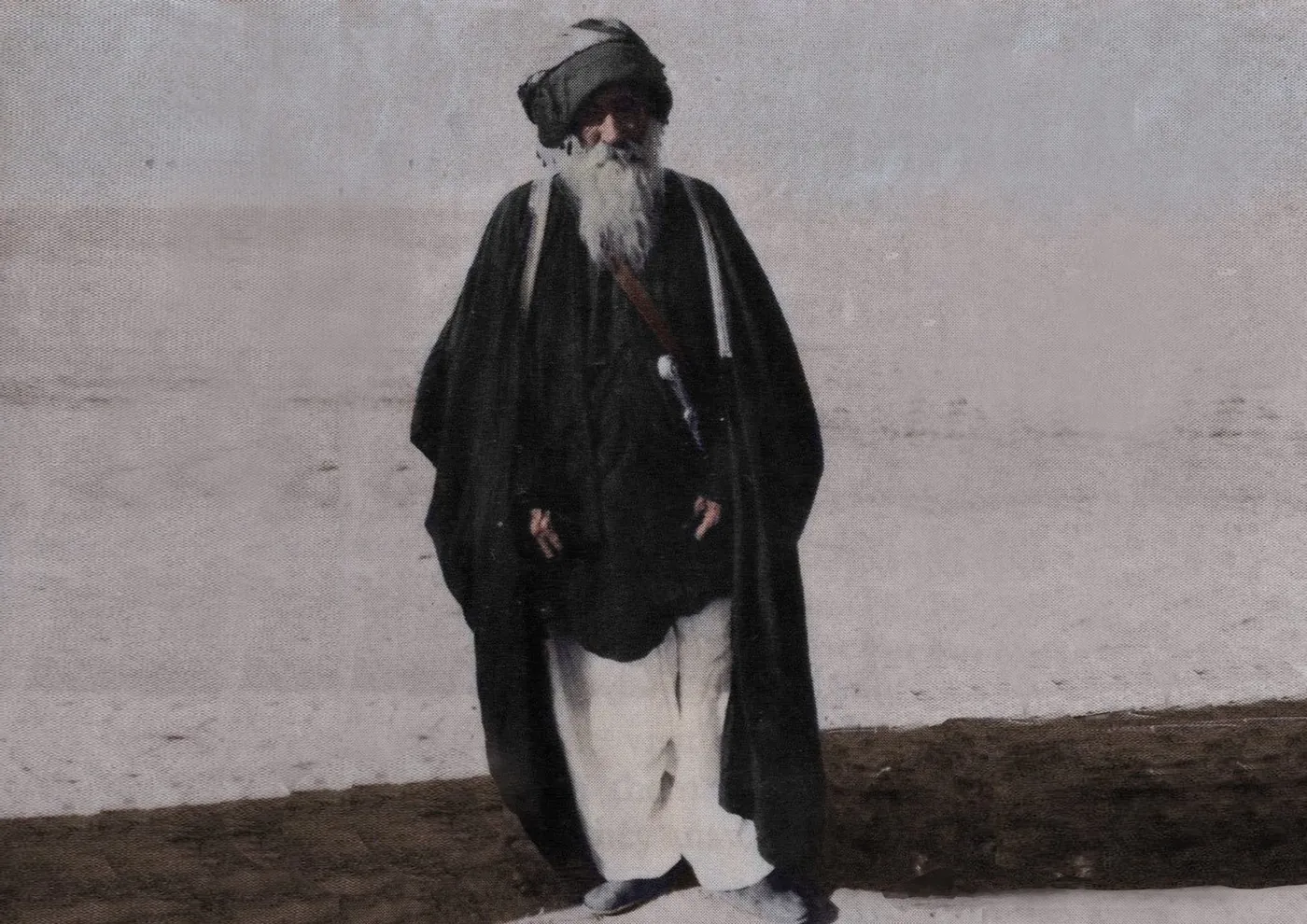
Hamo Şero, 1915
1. Introduction
When the first Ezidis came to Germany from what is now Turkey in the 1960s – among other things to work – people certainly asked themselves who the Ezidis are. The first written records on this were found in work papers and/or at the state immigration authorities when it came to granting a right of residence. How did Ezidis answer the questions about ethnicity and religion there?
Over time, people began to explain the group of Ezidis “in writing”. As a result, numerous literary works were created that tell of the Ezidis to this day. These works are mostly based on data and information gathered in academic work, but also in public debates. At the same time, however, it can be observed that the content of these works does not match, which causes confusion both in the Ezidi community and among the world’s population as a whole, because different pictures of the Ezidis are conveyed even at a basic level. Sometimes the Ezidis are a religious minority, sometimes followers of the prophet “Zarathustra or Zoroaster”. Then they are religious followers of the archangel Tawsi Melek, and finally, not to be forgotten, they belong to the Kurdish people. The list of associations with the Ezidis could certainly go on; we deliberately do not reproduce them here because of our question. From these examples of how the Ezidis have been described academically, one thing can be stated:
Despite numerous writings, especially by Ezidi academics, there is currently no consistent picture of the Ezidis. Of course, it would be irresponsible to speak of “THE” Ezidis (keyword: heterogeneity), but there should be a basic idea of who the Ezidis are – especially if one dares to present oneself as a representative of the Ezidis.
It should be noted here that the Ezidis have so far not been able to convey a consistent picture of, or knowledge about, their customs and traditions, ethnicity, religion, language, culture and history – even though the questions are often not profound but “simple” ones, such as whether the Ezidis are an ethnic group or a religious minority within the Kurds. At this point we put forward the following thesis: without political and external influence – which actually serves to maintain a particular ideology (namely the Kurdish nationalist “idea”) that often instrumentalises Ezidis – it would be “easier”, in the interest of all Ezidis, to debate a picture and common understanding of the Ezidis that is produced, developed and conveyed independently and collectively. In short: without the external political and foreign ideological influence of those debating, it would be more likely to produce a basic understanding of and knowledge about the Ezidis.
Excursus: At this point we must above all remember the genocide of the Ezidis of 3 August 2014 in Shingal (northern Iraq). When the Islamic State took Mosul, many Ezidis and experts foresaw that the Islamic State would soon attack Shingal and thus the Ezidis. Some Ezidis tried to leave Shingal in time to flee to the safe Kurdish autonomous region, but in vain. At the border they were turned back by the Kurdish Peshmerga, who said they would protect them from the Islamic State and defend them honourably – the last time as late as one day before the genocide. When the Islamic State began attacking Ezidi settlements on 3 August 2014 at 2:30 a.m., according to our research about 12,000 Kurdish soldiers were heading towards the safe autonomous Kurdistan Region.
What happened next, the whole world learned. Today, more than 300,000 Ezidis who used to live in Shingal live in refugee camps “supervised” by the regional government.
Both as a result of the 74th genocide against the Ezidis and in general, there is now a worldwide discussion about who the Ezidis are. Quite apart from existing publications, there are currently states that have classified the Ezidis as an ethnic group (for example Russia, Armenia and Georgia), while others state that the Ezidis belong to the Kurdish people. Both scholars and people of Ezidi origin make differing statements on the question of who the Ezidis are, which we would like to examine more closely below.
2. Who are the Ezidis? A brief look at the literature
As a representative of the Ezidi group, Tolan (2015), in the context of his work at the “Central Council of Yezidis in Germany”, states that in terms of ethnicity the Ezidis belong to the Kurds (2015). Even after the 74th genocide against the Ezidis, Kizilhan (who implemented the project and is a psychotherapist), in the context of the “Baden-Württemberg project” for the psychotherapeutic care of one thousand Ezidi women (and girls) who had been held captive by IS, continued to give public speeches and publish writings in which he counts the Ezidis as part of the Kurdish people. These are examples of representatives of one side.
The other side includes, among others (together with a growing number of Ezidis living in Germany and in Shingal), the Ezidis living in the former Soviet Union, who are officially recognised and registered by the state as an ethnic group.
It follows that we are factually talking about one group, but that fundamental questions are answered differently. The debate held most often in the Ezidi community at present is whether the Ezidis are an ethnic group or belong to the Kurdish people as a religious minority – which reflects the current problem only too well. To answer this clearly, it should not be enough to put forward simple theses, as just mentioned and “successfully” done in the past; instead, one must clearly distinguish what is being talked about and debated. To do this successfully, terms such as ethnicity or ethnic group, religious minority and political ideologies in everyday life should be examined more closely when it comes to who the Ezidis are.
In the following, we will approach the question of what an ethnic group is. To this end, we will look at various definitions in order to shed light on where the “Ezidi question” stands in this respect.
3. Definitions of ethnic groups
In the field of ethnology, scholars originally spoke mainly of “peoples”. This changed as a result of the work of the influential ethnologist Shirokogoroff: from the 1920s onwards, the term “ethnos” (a synonym for “people”) came into use. In the German-speaking world, the term “ethnic group” has replaced words such as “people” since the 1950s (Beer, 2019). An “ethnic group” can be defined as a predominantly endogamous community spanning many families, whose members – in distinguishing themselves from other people – share a common descent, a common history and usually a common set of values and norms. Endogamy (marriage within the group) means that marriage partners are mainly sought within this community (Beer, 2019). What should be emphasised in this definition is that, in endogamy, marriage partners are mainly chosen within one’s own ethnic group. This apparently applies to all ethnic groups worldwide – except the Ezidis, where the aspect of “marriage within the group” is presented under the guise of religion (keyword: “strict religious marriage rules among the Ezidis”). Whether this is legitimate and what the actual reasons for it are will be explained later.
Alenfelder (2019) states that the term “ethnic group” refers to a group of people bound together by common characteristics such as language, culture and customs. According to Schmitt (2019), an ethnic group has a common history, a common culture and a connection to a particular territory. He further lists a sense of community, or “a feeling of solidarity and togetherness for an identifiable population of people”, which includes a common language (Schmitt, 2019). Summarising the core statements of the definitions presented so far, an ethnic group can broadly be described as a group with a common language, culture and customs, history and common origin. Alenfelder (2019) also mentions the feeling of solidarity or community. In view of social diversity and people’s individual social backgrounds and ways of life – for example ideological and political attitudes – this aspect is left aside in the following explanation: if it were taken into account, any attempt to examine an ethnic group as a collective would fail, at least when the question is one of ethnic categorisation. From the definitions presented, individual terms that should be of great importance for an ethnic categorisation are listed and explained below.
Finding: The definitions of an ethnic group show no association with religion – because religion is a domain of its own.
In the following, the terms identified above are discussed one by one in relation to ethnicity and explained using the example of the Ezidis.
Culture
Fundamentally, culture refers to how people shape their life together (Pawlak, 2019) – how Ezidis live among themselves and how they encounter non-Ezidis. To examine the term more closely, it first seems necessary to fill it with concrete points in order to determine whether the “way of life” is shaped by Ezidi or by “non-Ezidi (and thus Kurdish)” practices. Take marriage and wedding customs: in Germany, nobody would ever think – so the argument goes – that the stag or hen party, the flower children at the wedding, “carrying the bride over the threshold” or “throwing rice” (one of the oldest German wedding customs) have religious connections. When it comes to the Ezidis, things become interesting. In literature, under the name “Ezidis”, all of the following wedding customs are presented under the guise of religion (keyword: “religious marriage rules among the Ezidis”). In the past, predominantly negative associations were often mentioned in this context, as terms such as “honour killings” show – and these were frequently traced back to the religion of a community. If one asks those concerned in which orally transmitted religious passage this (the legitimisation of killing in religion) is mentioned, there will be no adequate answer. If such an act is justified by religion because the perpetrator was supposedly very religious, then one should in the same breath ask about the creed – which, as a rule, cannot be stated, owing to a lack of knowledge about the religion. Faced with such critical questions, the perpetrator’s attempt to justify his behaviour by a religion that supposedly calls for death would fail. Unfortunately, in the past this did not usually happen (not even among outsiders). It would have been necessary to get to the bottom of myths instead of continuing to reproduce them. Attributing the behaviour of individuals – regardless of their social background (such as race, class, body and gender) – to their religion or ethnicity is stigmatising and discriminatory. In this section, we therefore make an objective attempt to examine the concept of culture in the context of wedding customs. As already mentioned, there are German customs that are practised at German weddings quite apart from religion. Among Ezidis, the following examples can be named:
- “The husband fetching his wife from her parents’ home”;
- after a “getting-to-know-each-other phase” with his future wife, the man has the option of visiting the home of his future wife’s parents together with his own parents and witnesses, in order to ask for the daughter’s hand in marriage;
- OR the option of “eloping” with his wife. It should be noted here that the option of “eloping” with one’s beloved, without taking the parents’ views and attitudes into account, has been used comparatively more often than one might expect – including in the Ezidis’ homeland, which is currently under foreign occupation.
On the wedding day there is often a tree decorated with sweets, among other things (“dara mraza”), which is meant to symbolise happiness for the bridal couple. In the Ezidis’ homelands this tradition was lived more intensively, while today, especially in the West, it is handled in different ways. In the post-Soviet region, for example in Armenia or Georgia, this wedding ritual is practised comparatively intensively among Ezidis.
When the “wedding car” arrives at the wedding hall, the husband traditionally opens the car door for his wife so that she can step out. On the way to the entrance of the hall, the wife throws an oval ball – often made of clay and filled with money and sweets – onto the ground; if it breaks apart, this promises happiness for the marriage. Naturally, during or after the wedding a person (usually a married couple) talks with the bridal couple, advising them on the challenges of married life and preparing them for it.
At an Ezidi funeral, the deceased is wrapped in a white shroud (“kefen”), laid in the sack and buried. Before and after the burial, mourning usually takes place together over a total of three or seven days, often in a rented hall. Food and drink are offered throughout. Reducing a traditional and very time-consuming Ezidi funeral to religion would describe a constructed situation that does not exist in reality: during the funeral, religious prayers (dua) and hymns (qawl) are usually recited for a few minutes at most. Objectively, the share of cultural practices at a three- or seven-day Ezidi funeral (serving food and drink as an expression of basic hospitality) is far greater than the religious part actually practised. That part is usually performed by one person, while the others do not repeat it, but partly listen and partly continue to look after the many guests. To give an example relating to our basic question (ethnic group versus religious group), let us briefly look at religious practices at Muslim or Christian funerals. There, without doubt, those present partly repeat and/or imitate the religious practices during the address of an imam or priest – a difference like “night and day” compared with the Ezidi community described above. To give the concept of culture more substance, let us look at New Year, which is celebrated worldwide at the end of the last day of December – and which, of course, Ezidis celebrate too. Nobody would ever attempt to interpret New Year’s Eve as a religious occasion. Why should this be any different for the Ezidis, who celebrate their own New Year in April? Ezidis are – partly through their own fault – said to have a religiously motivated New Year’s festival, which is far removed from everyday Ezidi reality. The Ezidi New Year certainly contains a comparatively small religious element, but, as for the population at large, it should be categorised as a “cultural” festival. It is interesting at this point to look back to the time of the Sumerians, who also celebrated New Year in April and are not understood as a religious group.
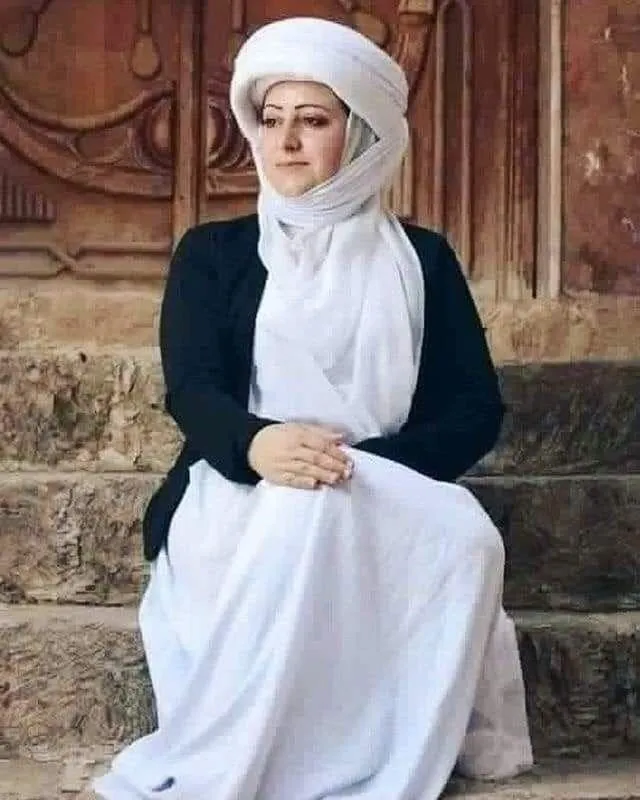
In the context of culture, the following picture shows a woman in traditional “Ezidi” dress – far removed from any religious context.
4. History – shared blows of fate
In the following, the topic of “shared blows of fate”, which should be of great importance for an ethnic collective, will be briefly touched upon. In connection with war and killings, ethnic groups – regardless of ideological views – share collectively traumatic experiences, such as the genocide of the Armenians in 1915, which is still present in the Armenian community today. Historically, it can be demonstrably emphasised that the Ezidis and Kurds, despite differing views on identity, did not suffer the same genocides and the blows of fate associated with them. On the contrary: Kurds such as Bedirxan Beg also committed a massacre against the Ezidis in Tur Abdin between 1836 and 1844. When Saddam Hussein carried out a poison gas attack on the city of Halabja in today’s autonomous Kurdistan Region on 16 March 1988, no Ezidi was physically affected. On 7 August 2007, about 800 Ezidis were killed and 1,500 more injured in Shingal by an explosion (two trucks loaded with explosives). According to our research, there are no official figures of Kurds killed and/or injured in this attack.
Another blow of fate is the genocide against the Ezidis committed by the Islamic State on 3 August 2014, in which no Kurds were affected either. To avoid any misunderstanding: this is not about comparing and ranking these fates on a scale from “terrible/tragic” to “not terrible/not tragic”, but simply about using short examples to stimulate thought and to show objectively that, historically – regardless of ideological and political attitudes – there have been no shared blows of fate (which does not mean that people may not feel connected ideologically and politically on certain issues).
5. Origin and areas of settlement
According to Taş (2014), northern Iraq, north-eastern Syria and south-eastern Turkey are the main areas of Ezidi settlement; he adds that northern Iraq is the main area, where half of all Ezidis live (Taş, 2014).
That was the situation in 2014. It should now be added that – especially after the genocide – more and more Ezidis have spread across the globe: today you will also find Ezidis in Australia, Canada, America and Europe, above all in Germany. Not to forget the Ezidis living in the former Soviet Union, who today live in Georgia, Russia and Armenia. (Depending on the source and author, the number of Ezidis worldwide is estimated at between 1 and 2 million.)
6. Language
To shed more light on the language of the Ezidis, we would first like to describe what has so far been presented as the language of the Ezidis (in Germany). With some exceptions, the prevailing view is: “The Ezidis speak Kurdish, more precisely the Kurmanji dialect” – this, in essence, is the most common answer to the question of which language the Ezidis speak. It is voiced and passed on in part by Ezidis and also by non-Ezidis. This raises the following question: if “Kurmanji” (alongside the dialects Gorani, Sorani and Zazaki) is a dialect spoken by Ezidis, how is a dialect to be defined, and by what criteria can it be “measured”?
On this, Algin (2019) takes the view that there is no agreement or consensus among linguists on how to distinguish between language and dialect. “There is no scientifically undisputed criterion for distinguishing between language and dialect” (Algin, 2019). He further argues that the distinction between language and dialect is often made less for scientific reasons than for social or political ones.
The majority of Ezidis from the former Soviet Union use the name “Êzd(î)kî” (English: “Ezidi”) for their language, which has been officially recognised in Russia, Georgia and Armenia since 2001. Algin also states that there is great intolerance and rejection of the use of “Êzdîkî”. In this context, he refers to the intellectual sphere of the Ezidis, which is predominantly Kurdish-nationalist in outlook (Algin, 2019). According to Algin (2019), “Kurmanji” and “Êzdîkî” are “names of the same language variety”, and he cites the example of “Bosnian”, “Serbian” and “Croatian”, which are likewise different names for the same language.
At this point it is very important to mention the anthropologist Ernest Chantre, who interviewed Ezidis (in Birecik) in present-day Turkey during his research trip in 1895. Translated from French, an Ezidi is reported to have said:
“Both (Ezidis and Kurds) speak ‘Kourmandji’. However, the Ezidis call their language ‘zyman e ezda’ (the language of the Ezidis), and they claim that it is the Kurds who speak their language, and not they who speak the language of the Kurds.”
(“Les uns et les autres parlent le «Kourmandji». Quoique les Yézidi appellent leur langue «zyman e ezda» (langue des Yézidi) et prétendent que ce sont les Kurdes qui parlent leur langue, et non pas eux qui parlent la langue des Kurdes.” (Ernest Chantre, “Notes ethnologiques sur les Yésidi”, 1895))
It can be concluded that, long ago, the Ezidis did not want to use the name “Kurmanji” for their language, but preferred to speak of “the language of the Ezidis”. Why these facts – which would have been necessary for a comprehensive work presenting a complete picture of the Ezidis – were deliberately not mentioned is questionable and must be viewed critically (Algin, 2019). As the reason for this, Algin points to the “Kurdish nationalist” ideology of those concerned.
7. Conclusion
In retrospect, it can be summarised that, with regard to the “ethnic question”, definitions were presented whose key terms – such as culture and origin – could be filled with objectively verifiable content. With regard to the ethnic group, this content is to be categorised as “Ezidi”.
To take a position on existing myths: if the Ezidis really belonged ethnically to the Kurds, we would have to be able to call the cultural – not religious – practices mentioned above “Kurdish”. In theory, Kurds would then (also) have to live these practices, which is far removed from any Kurdish everyday reality if one objectively observes, for example, a Kurdish wedding and/or funeral. That is why – in line with a Kurdish nationalist attitude – Ezidi cultural practices that would have pointed to an independent Ezidi ethnic group were presented in the past as religious practices, in order to make room, under the cover of Kurdish ethnicity, for a politically Kurdish attitude and identity.
In this way, consciously or unconsciously, great attention and importance was given (not infrequently by Ezidis) to the Kurdish nationalist question and the concerns associated with it, while at the same time the Ezidis were, consciously or unconsciously, instrumentalised for these interests by Kurdish nationalists. Today, Kurdish nationalist influence has in part become so firmly established in the Ezidi community that people have forgotten that Ezidi cultural practices are in fact Ezidi and therefore not to be regarded as Kurdish. The Ezidis fulfil all the criteria to be politically recognised as an ethnic group, independent of Kurdish nationalist influence.
Bibliography
- Aharon (2019): https://haolam.de/artikel_25790.html (last accessed 14 October 2019)
- Alenfelder (2019): https://profdralenfelder.weebly.com/ethnische-herkunft.html (last accessed 13 October 2019)
- Algin (2019): http://www.ezidipress.com/blog/ezdiki-die-sprache-der-eziden/ (last accessed 27 November 2019)
- Pawlak (2019): https://www.helles-koepfchen.de/artikel/3133.html (last accessed 14 October 2019)
- Kizilhan (2019): Society for Threatened Peoples, https://www.gfbv.de/de/informieren/zeitschrift-bedrohte-voelker-pogrom/287-yeziden-kaempfenums-ueberleben/wer-sind-die-yeziden/ (last accessed 8 October 2019)
- Schmitt (2019): https://www.rechtsanwalt.com/fachbeitrag/ossi-urteil/ (last accessed 13 October 2019)
- Taş (2014): https://www.migazin.de/2014/08/13/die-yeziden-sonnenanbeter-aus-mesopotamien/2/ (last accessed 20 October 2019)
- Telim (2015): Religionen im Gespräch, http://www.religionen-im-gespraech.de/thema/die-unbekannte-religion-jesidenniedersachsen/hintergrund/jesidentum-was-ist-das (last accessed 8 October 2019)